

A perfect milk carton is important to keep the milk safe and fresh. The purpose of the boxes is not only to protect the packaging but also to impress the customers. Here we need the perfect packaging. Perfect size = ideal packaging. It will save you both money and space. While deciding on the Milk carton the topmost question is:
“How do we measure milk cartons the right way before we place a big order?”
EZ Custom Boxes will help you get the packaging with the perfect size and make your product look flawless.
This guide will help you to measure and choose the right size for your milk products.
Milk packaging plays a bigger role than most brands realize. The milk carton size you choose affects everything—from freshness and safety to branding, shipping, shelf placement, and customer convenience. Whether you sell milk, flavored dairy drinks, plant-based beverages, or school lunch packs, choosing the right milk carton sizes ensures your product looks professional and fits every stage of distribution.
This complete guide explains how to measure milk cartons, how carton volume works, what sizes are most common, and how brands can pick the perfect carton size before placing a big order. If you're trying to calculate carton milk size, compare sizes of milk cartons, or understand how many units fit inside a shipping box, you’ll find everything here.
Let’s get started with the basics.
Why Milk Carton Size Matters for Brands
A milk carton does more than simply hold liquid. The right size:
- Protects the product
- Keeps milk fresh
- Reduces shipping costs
- Helps the carton fit retail shelves and refrigerators
- Enhances branding & visibility
- Influences customer buying decisions
- Prevents packaging waste and leakage
- Improves stacking and storage
If your carton is even slightly too big or too small, it leads to:
- wasted space
- product instability
- crushed cartons
- higher shipping costs
- weak branding layout
- dissatisfied buyers
This is why understanding milk carton size is essential before placing bulk orders.
What Are the Common Sizes for Milk Cartons?
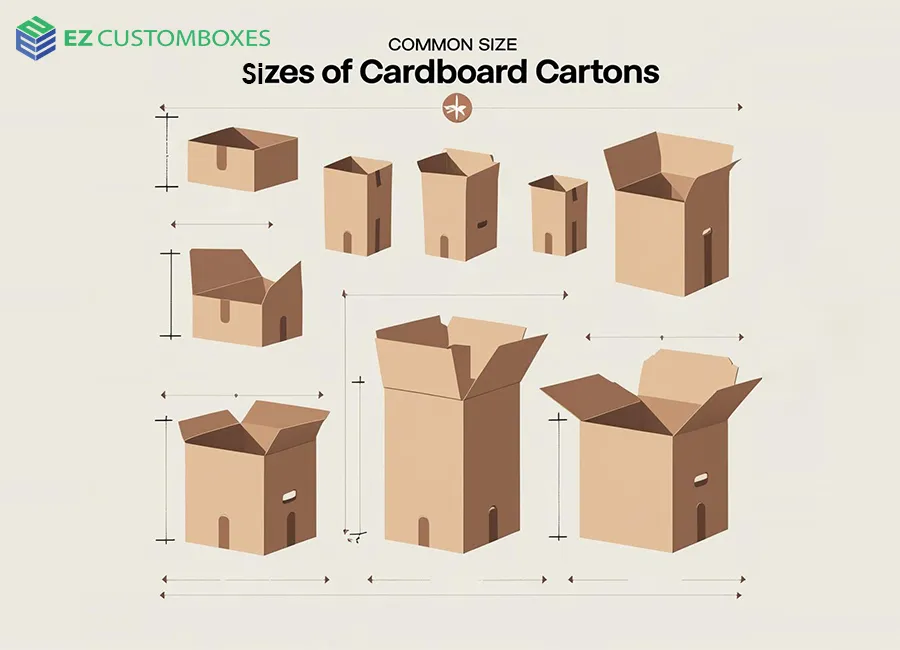
Here are the standardized milk carton sizes used commonly:
|
Carton Size |
Volume It Holds |
|---|---|
|
Small |
237 ml (8 oz) |
|
Medium |
473 ml (16 oz) |
|
Regular |
946 ml (32 oz) |
|
Large |
1 liter (33.8 oz) |
|
XL |
1.89 liter (64 oz) |
|
Jumbo |
3.78 liter (1 gallon) |
How Do You Measure a Milk Carton the Right Way?
The right size of the box depends on the correct measurements, and this is how it could be measured: You measure a milk carton using three sides:
- Length (L) – the longest side of the box at its base. Measure from left to right, and you will get the length of the box.
- Width (W) – The shortest side at its base. Measure its side panel from front to back to get the width.
- Height (H) – The distance from top to bottom even including any flaps or the spout.
Example: If your milk carton is:
3 inches long, 2.5 inches wide, and 9.5 inches tall, then you write: 3" × 2.5" × 9.5" (L × W × H)
What’s the Difference Between Volume and Size?
We see the same quantity of milk in different shapes of boxes. Some boxes may be taller but slim, some may be shorter but wide, but how? It all depends on the volume of the box.
Size and dimension mean the size of the box: width, height or length of the box. Whereas volume means how much milk is inside. So for getting the correct the size of the dimensions and volume, both are important.
Volume vs. Size: Why They Are Not the Same
Many manufacturers confuse carton size with carton volume, but they’re completely different.
✔ Carton Size (Dimensions)
This refers to the physical measurements of the carton:
- Length (L)
- Width (W)
- Height (H)
✔ Carton Volume
This is how much milk the carton can hold, measured in:
- ml
- liters
- ounces
Two cartons can have the same volume but different carton milk size because of shape variations (slim, wide, tall, compact).
Understanding both ensures your carton fits machines, shelves, shipping boxes, and customer expectations.
How to Measure a Milk Carton Correctly (L × W × H)
Proper measurement is essential for manufacturing accuracy. A small mistake in measurement can cause:
- improper fitting
- carton leakage
- wasted production
- wrong printing layout
- higher material costs
Here’s how to measure any milk carton size accurately.
1. Length (L)
The longest side of the carton’s base.
Measure from left to right across the bottom panel.
2. Width (W)
The shorter side of the base.
Measure from front to back.
3. Height (H)
The vertical dimension.
Measure from bottom to top, including any:
- spouts
- flaps
- resealable caps
Example Measurement:
If your carton is:
- 3″ long
- 2.5″ wide
- 9.5″ tall
You write the size as:
3″ × 2.5″ × 9.5″ (L × W × H)
Always list the dimensions in this order.
Why Carton Shape Matters to Customers
Choosing the right carton of milk size isn’t only about practical use—it also affects the customer’s experience.
✔ For Kids or Schools:
- Short, wide cartons
- Easier to hold
- Less likely to spill
✔ For Refrigerators:
- Square or rectangular cartons
- Fit neatly inside doors or shelves
- Stack easily
✔ For Retail Shelves:
- Tall and slim cartons
- Save shelf space
- Improve vertical visibility
✔ For Premium Products:
- Unique shapes
- Custom sizes
- Matte or glossy printing
Design and dimensions directly influence whether customers find your product appealing or difficult to handle.
How to Calculate How Many Cartons Fit in a Shipping Box
Brands often need to determine shipping capacity before ordering cartons. Here’s the simplest way to calculate:
Step-by-Step Method
1. Measure one milk carton:
Record:
- Length
- Width
- Height
2. Measure the master shipping box:
Record its:
- Length
- Width
- Height
3. Test possible orientations:
Because cartons can be arranged:
- upright
- sideways
- stacked
- horizontal
You must check multiple arrangements.
4. Divide the box dimensions by carton dimensions:
Example:
If the shipping box is 12″ × 10″ × 10″
and your carton is 3″ × 2.5″ × 9.5″…
Try arrangement A:
- 12 ÷ 3 = 4 cartons (lengthwise)
- 10 ÷ 2.5 = 4 cartons (widthwise)
- 10 ÷ 9.5 = 1 carton (heightwise)
Total = 4 × 4 × 1 = 16 cartons
This gives you a close estimate.
Important:
Volume calculations alone do not provide accurate carton counts; orientation is far more important.
How Carton Size Affects Branding & Printing Layout
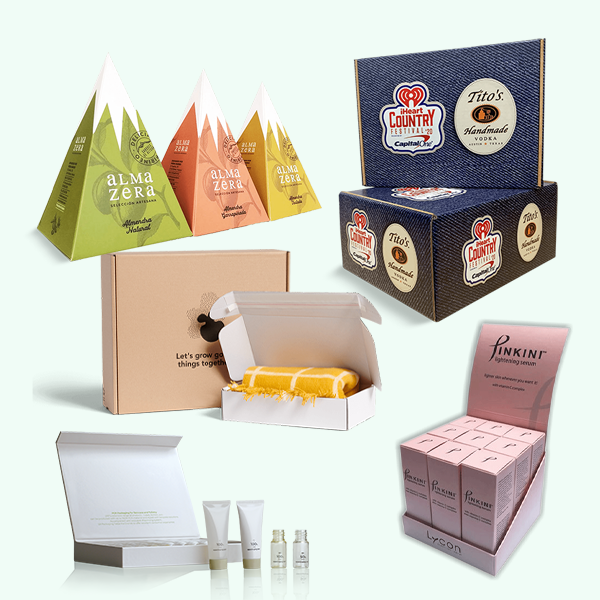
Cartons are visual billboards. The dimensions determine:
- where the logo goes
- how big text can be
- image clarity
- room for nutrition labels
- space for brand story
- printing cost
✔ Big Cartons
- More printing real estate
- Ideal for full artwork, storytelling, and promotional layouts
✔ Small Cartons
- Require smart, clean design
- Too much text can look messy
- Minimalist layouts work best
✔ Wide Cartons
- Allow large horizontal designs
✔ Tall Slim Cartons
- Best for vertical branding elements
Your carton’s dimensions directly impact your brand’s identity on the shelf.
Does Milk Carton Size Affect Cooling & Storage?
Yes—carton milk size influences cooling efficiency.
✔ Bigger cartons take longer to cool
Because they contain more mass.
✔ Slim cartons cool faster
Because they have more surface area exposed to air.
✔ Square cartons store better
Because they:
- stack neatly
- reduce wasted space
- improve stability
✔ Odd-shaped cartons can cause issues
They might not fit:
- refrigerators
- vending machines
- retail shelves
- coolers
Compatibility is a major factor in packaging design.
Does Carton Size Affect Transportation & Shipping Costs?
Absolutely. Milk packaging dimensions directly affect:
- cost per unit
- cost per shipment
- number of cartons per pallet
- warehouse storage capacity
✔ Larger cartons = fewer units per shipment
This increases freight costs.
✔ Well-measured cartons lower shipping fees
Because they reduce air gaps.
✔ Compact designs save money
Especially for bulk or international shipping.
If your carton is sized incorrectly, even by 0.5 inches, you may lose thousands of dollars annually in wasted space.
Can You Order Custom or Unique Milk Carton Sizes?
Yes. Many brands need unique or niche milk carton sizes, such as:
- school lunch cartons
- premium almond or oat milk cartons
- flavored drink cartons
- single-serve convenience cartons
- small on-the-go cartons
A professional packaging manufacturer can help you:
- calculate exact dimensions
- choose the ideal shape
- adjust printing layout
- ensure machine compatibility
- maintain food-safe standards
Customization is useful for brands entering competitive markets.
Final Checklist Before Ordering Milk Cartons
Does Carton Shape Matter for Customers?
Choosing the size or shape of the boxes is not only to make it look attractive but its also selected according to the target audience, Such as:
- For kids, small and wide cartons are preferred
- Commonly, square or rectangular cartons are preferred. It's easy to store in the refrigerator.
- Tall and slim carton helps in saving shelf space.
How Many Milk Cartons Fit in a Shipping Box?
To calculate how many cartons will fit in the master carton, you need to:
- Calculate the Length, height, and weight of a single carton
- Multiply the length, weight, and height of the carton to get the volume of one carton.
- Measure the size of the master box
- Calculate the big box volume
- Divide the box's volume by the carton's volume. This gives you the maximum theoretical number of cartons that could fit.
In reality, you also have to see how these small boxes are arranged in the big box. Stacked, side-by-side, etc
Can Carton Size Affect Branding and Printing?
Brands also use the boxes as a canvas to tell their story, so size of the box affects the branding and the printing. Bigger boxes have more space to provide information to its customers, such as ingredients, product, and company name or any other important instructions. Smaller cartons need smart design which ot look messy. For wider packaging, the brand can choose the horizontal designs. Thus dimensions of the box have a lot to do with the design of the box. EZ Custom Boxes team helps you design the box aligned with the box dimensions.
Will Carton Size Affect Fridge or Shelf Space?
Sometimes the question arose that does it take more time to make bigger cartons cool? Before deciding the dimensions of the box, make sure it would easily fit into refrigerators, retail shelves or vending machines. Big and odd-shaped cartons may not fit well in the refrigerators and also take longer to get cool. On the other hand, the tall and slim cartons can be neatly organized in the refrigerators, use less space and cool faster.
Do Carton Sizes Affect Transportation and Shipping Costs?
The larger the cartons more space they occupied, and thus cost more while shipping or even fewer boxes per shipment also cost more. But brands can reduce this cost by using well-measured boxes. Here, EZ Custom Boxes help to calculate the perfect dimensions, how you can reduce the extra air space, provide you with bulk shipping tips, and how to lower delivery costs. Because the team knows that the right size of the boxes not only saves the space but also your money.
Is It Possible To Get a Unique Carton Size?
If the companies need a unique size for their packaging, Our Team will guide them and come up with visually attractive, functional, but with a unique size or shape. If the brands are targeting a niche like only school lunch packs, it's also possible. By taking correct measurements, we create the cartons with the design that aligns with your customer’s needs.
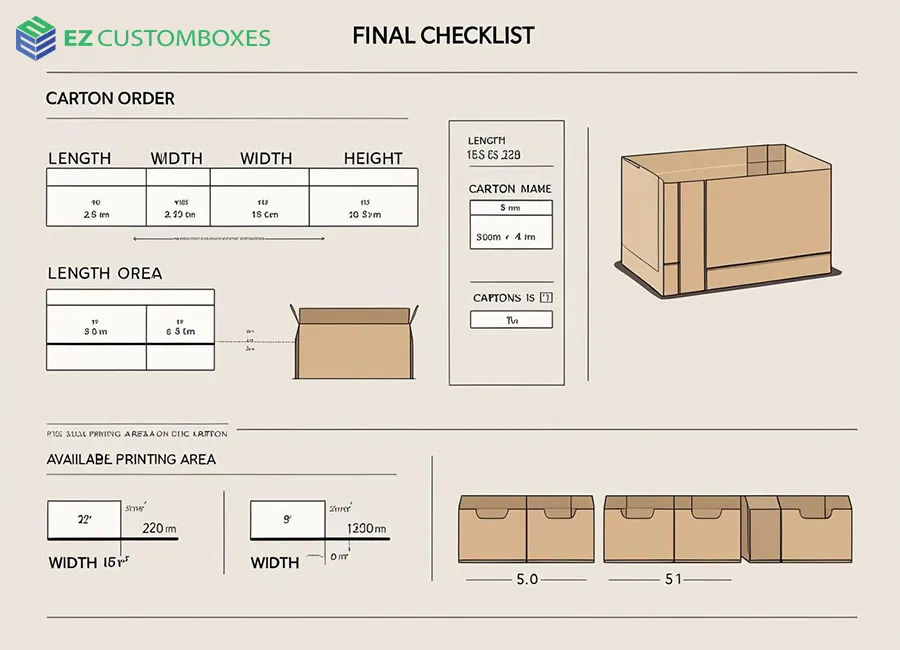
Final Checklist Before You Place a Carton Order
Use this checklist to avoid mistakes:
✔ Know the carton’s exact size (L × W × H)
✔ Confirm the volume each carton must hold
✔ Decide the printing area needed
✔ Check how many units fit in a shipping box
✔ Confirm cooling and shelf compatibility
✔ Choose the right shape for your customers
✔ Determine if special closures (spouts, caps) are needed
✔ Ensure the size supports your branding layout
✔ Verify cost efficiency and shipping optimization
Once everything is verified, you’re ready to place your order.
FAQ’s
- What is the standard milk carton size?
There is no single global standard, but the most common milk carton sizes are 8 oz (237 ml), 16 oz (473 ml), 32 oz (946 ml), 1 liter, 64 oz, and 1 gallon.
- How do I measure a milk carton?
Measure the:
- Length (L): longest bottom side
- Width (W): shortest bottom side
- Height (H): bottom to top including spout
Use the format: L × W × H
- How much milk fits in a carton of milk?
It depends on the carton’s volume. Common volumes range from 237 ml to 1 gallon (3.78 liters).
- Why are some milk cartons tall while others are short?
Because brands choose shapes based on:
- shelf space
- customer preference
- branding layout
- cooling efficiency
- transportation needs
- What carton size is used in schools?
Most schools use 8 oz (237 ml) cartons because they are easy for kids to hold and consume.
- Can I create a custom milk carton size?
Yes. Manufacturers can design cartons with unique shapes, volumes, or branding requirements.
- Do larger milk cartons cost more to ship?
Usually yes, because they take up more cubic space and reduce pallet capacity.
Conclusion & CTA
Choosing the right milk carton size ensures your product is safe, attractive, cost-efficient, and customer-friendly. From measurements to volume, printing layouts, cooling performance, and shipping costs, the size you pick can make or break your packaging strategy.
If you’re ready for perfectly measured, professionally printed, and fully customized milk cartons, EZ Custom Boxes can help you choose the ideal dimensions and create packaging that stands out on the shelf.
Contact us today to get expert guidance and packaging that makes your brand shine.

Ethan Robert works at EZ Custom Boxes as their digital marketing manager. Having a solid background in SEO, content strategy, and eCommerce growth, he specialises in using creative packaging content and data-driven campaigns to drive online visibility and brand interaction.
Recent Blogs


Related Blog
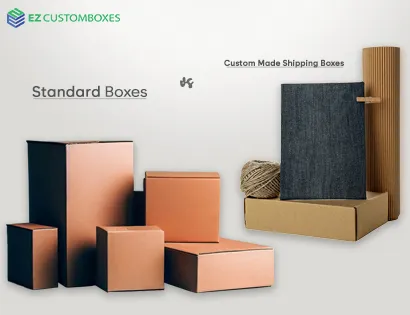
Standard vs. Custom Made Shipping Boxes: A Data-Driven Investigation
It's not just about wrapping when you pick the correct shipping box. It also impacts your customer experience, brand image, logistical costs, and eco-friendly initiatives. Let's examine the differences between standard (stock) and custom-made boxes in terms of their functionality, environmental impact, cost, brand promotion, and protection of items.
Read Article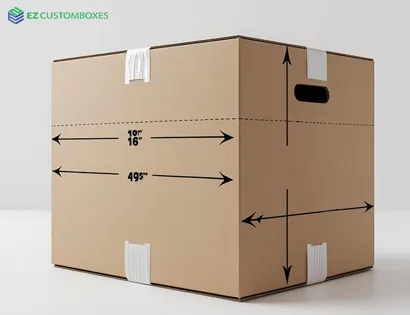
How To Measure Box Dimensions & Package Size
The first thing to note is to measure the box from inside. Use a measuring tape or ruler to measure length, height, and width. Length is the longest side of the box. The perpendicular or the shortest side is the Width, and height is measured from the base to the top edge. Always use the same unit of measurement (inches, centimeters, etc.) for all dimensions.
Read Article