

Paper is important for almost every industry, and each one uses the quality according to its requirements. Offices use lightweight paper for documentation, whereas businesses use the thicker paper for their promotional material. Here, the packaging industry uses the standardized measurement system called GSM. It determines the correct weight and density of the paper. It becomes straightforward for businesses to choose the exact material for their use.
Just imagine the flyer on the thin one. Does it look appealing? Obviously not, it will portray a low standard, look just ordinary, and may be ignored by the consumers. Whereas any promotional material printed on the high-quality, thick papers automatically enhances the worth of the brand. It gives a more professional and premium look, which instantly gets the customer’s attention.
EZ Custom Boxes is a big name in the packaging industry and an expert in using the exact GSM paper to create product tags, different promotional materials, or packaging inserts that meet professional standards. It is very important to understand the GSM paper weight so that you can select the perfect paper for your projects, whether it's a business card, packaging inserts or other promotional materials. This helps not only to ensure durability and print quality and most importantly, enhance the customer experience.

What is GSM Paper?
GSM = Grams per square meter; this is the global standard used to measure the weight of the paper. In easy words, this means how many grams are in exactly one square meter, or we can say the density or heaviness of the paper material.
If the GSM is higher, it means the paper is thick and heavy, where as lower GSM means lighter and thinner paper.
Examples include:
- 70–90 GSM: Standard printer paper
- 120–170 GSM: Flyers and brochures
- 200–230 GSM: Posters and greeting cards
- 250–300 GSM: Invitations and marketing cards
- 350 GSM: Premium business cards and luxury prints
Understanding the GSM allows the business to select the exact standard for its product.
How GSM is Measured
The GSM is measured by cutting a sample sheet of exactly one square meter and measuring its weight in grams. So the sheet weight is 90 grams; the paper is 90 GSM. This makes sure that the paper weight remains consistent regardless of sheet size, whether the paper is cut into A4 sheets, postcards, or business cards.
Why GSM Paper Weight is Important
It is important for the business to understand the importance of GSM, as it affects the multiple aspects of printing and packaging.
- Durability
The higher GSM means greater strength, as well as greater resistance to tearing or bending. This type of paper is used for products such as post cards or business cards.
- Printing Performance
Paper can also absorb inks, and how much it absorbs depends on the paper weight. Higher GSM paper produces sharper text and richer colors.
- Customer Perception
The quality of the paper also influences the consumer perception toward the brand. If the paper is of high quality, it enhances the brand’s worth. People consider it much more professional and reliable.
- Suitability for Packaging
EZCustomBoxes selects the perfect GSM level for your packaging inserts, product tags, and promotional cards to ensure they do not bend or tear during shipping and handling. It's a fact that a simple, high-quality tag also influences customers' perception.
Understanding Paper Thickness GSM
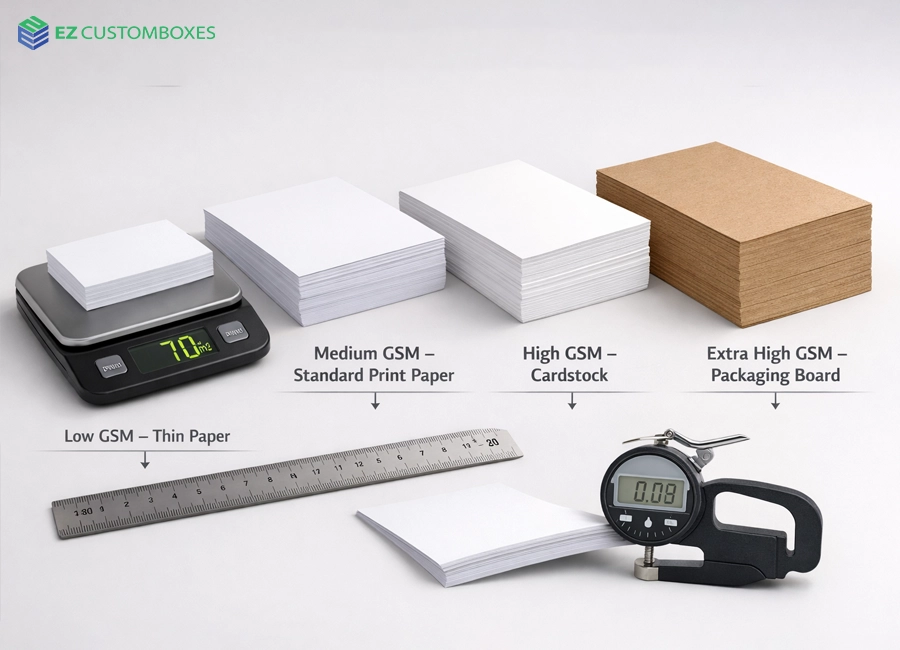
GSM measures weight rather than thickness, but it is an indicator of the paper thickness. Which depends on various factors, including:
- Paper fiber type
- Manufacturing techniques
- Surface coating
- Paper density
For example, coated paper with 250 GSM might feel slightly thinner than uncoated paper with the same GSM because coating compresses the fibers. So both the GSM and finishing options.
Printer Paper GSM
Some standardized GSMs serve different purposes; for example, lightweight paper is usually used for education and simple office use. Heavier paper is used for promotional purposes, including business cards, brochures, invitations, and other presentation materials. Lets discuss some of the standards
- 70–80 GSM Paper
Papers in this range are considered lightweight. So use it for common purposes, as it is simple to handle for photocopies and printing, and also costs less. Schools, offices, and institutions use this paper due to its high quality. This lighter-weight paper can easily pass through printers and make the printing more efficient.
Light quality does not mean it will not provide clear text printing, but obviously not as premium as the thicker paper. Heavy ink coverage may show through the back of the page, so it's not recommended for heavy designs. Overall, 70–80 GSM paper is valued for its affordability and practicality in everyday printing environments.
- 90 GSM Paper
This range of paper is not very thick but is still durable. Use of this range will give a smoother feel and a more professional appearance. It is often chosen when printed materials need to look. It should be polished but still compatible with regular office printers.
Here, there is less chance that the inks will show on the paper's other side, making it good for double-sided printing. It also handles ink and toner more effectively, producing sharper text and cleaner graphics. It is most commonly used as a letterhead, for professional documents, and also for important presentations. This paper provide the good quality in low cost.
- 100 GSM Paper
This is the medium range of the weight and more improved and thick which makes these pages more durable. It provides a premium feel and is also compatible with most of the printers. Because of its thickness, it provides better print quality and reduces the ink bleeding.
This makes it suitable for printing on both sides of the paper. This provide professional look and standard printing, but not like a cardstock. This paper is used for printing business proposals, certificates or flyers.
- 120 GSM Paper
This paper is much thicker and sturdier than the normal paper and is also considered to be the premium paper. This gives high quality finish and more durability. This paper is best use for material that contain images, charts and designs.
It is commonly used for making brochures,leaflets,certificates or reports.This paper weight is often selected for marketing materials because it feels stronger and more impressive than normal office paper while still being flexible enough for printing and folding.
- 230 GSM Paper
230 GSM paper is much thicker and comes in the category of light cardstock.This paper is durable and gives the premium feel this quality make it suitable for high-end printing. Stiff structure of the paper holds its shape well not easily tearable.
Thicker material also handle the ink coverage, vibrant colors and detailed graphics. As it make the material looks more visually appealing it is mostly used for greeting cards, invitations, brochures or postcards.
- 250 GSM Paper
This paper is way thicker and considered to be best quality. Its durable and sturdy structure maintains its shape. The thicker structure can hold vibrant colors and sharp images. This is best used for the promotional material that should be visually appealing. This is commonly used for high-quality invites and flyers, product tags, and light business cards.
- 350 GSM Paper
This paper is a heavy cardstock, which is thick, durable, and resistant to bending, which makes it premium for printing and gives a luxury feel. This trait is the reason the companies prefer this material for printing important printed products such as premium business cards, luxury invitations, postcards, or other packaging materials. EZ Custom Boxes also use 350 GSM paperboard for their high-product packaging, which indicates the weight and thickness of the paper used.
Coated vs Uncoated GSM Paper
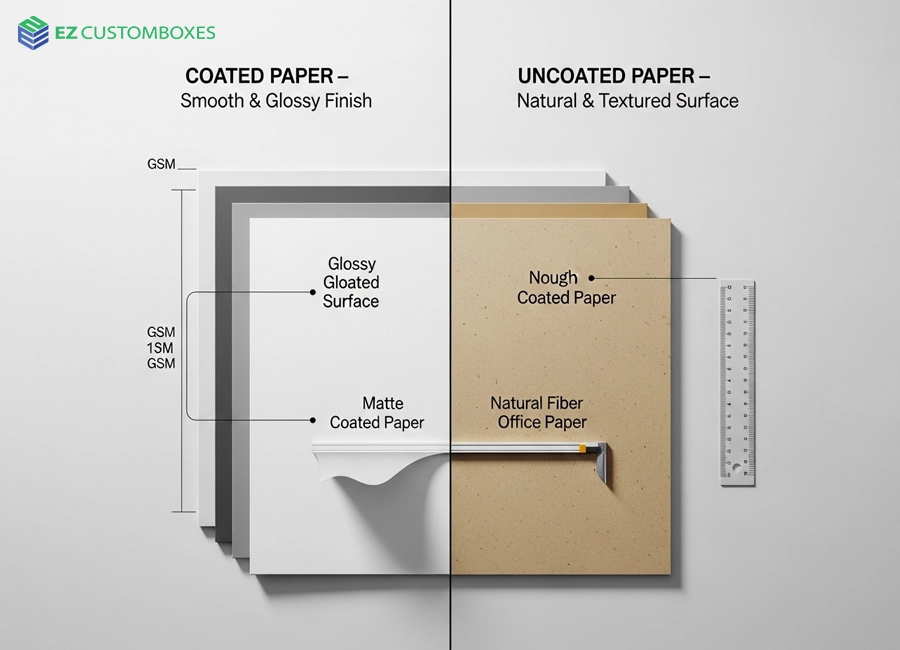
GSM paper comes in Coated and uncoated, and this affects the paper quality.
- Coated Paper
Coated paper ha smooth surface that provide the smooth and clear printing with color vibrancy. This also include Gloss, Matte and silk finishing.
- Uncoated Paper
The paper with natural texture and commonly used for letterheads, notebooks and writing paper.
Choosing between coated and uncoated paper depends on the intended use and design requirements.
Tips for Choosing the Right GSM Paper
- What is the purpose of printed material
- Is your printer compatible with the GSM
- What quality do you required
- Do you want to double side printing or not?
- Is the cost matched the quality
- Match GSM with Branding and Presentation
Choosing the right GSM ensures durability, better printing results, and improved brand presentation.
Why Businesses Choose EZ Custom Boxes
Its not just simple to select the paper for printing. But before choosing the paper, the businesses should also have knowledge of GSM as it influences several aspects of printing. If you want printed material that is durable and visually appealing with a professional look, just consider EZ Custom Boxes as your partner; they provide you with their expertise and provide you with the material that meets modern branding and marketing needs.
Contact EZ Custom Boxes today to get a quote and elevate your packaging with premium GSM paper.
Frequently Asked Questions
-
What is GSM paper used for in packaging?
It helps to determine the strength, quality, and durability of the material. -
What is the perfect size of GSM paper in packaging?
There is no single “perfect” GSM size, as it is chosen on the basis of how strong and premium the packaging should be. -
What is GSM paper used for printing purposes?
GSM determines the paper quality and feel, such as:
- 70–100 GSM: Documents printing
- 120–170 GSM: Flyers, brochures
- 200–350 GSM: Business cards, covers, postcards
-
What is the thickness of GSM paper in mm?
Paper thickness is not directly defined by the GSM, but it ranges from 0.05 mm to 0.10 mm for standard 80-110 GSM paper, and it may vary due to the coating and manufacturers -
What does GSM paper weight mean in grams?
This means the weight of the paper measuring 1 square meter. It shows how heavy or thick the paper is.

Ethan Robert works at EZ Custom Boxes as their digital marketing manager. Having a solid background in SEO, content strategy, and eCommerce growth, he specialises in using creative packaging content and data-driven campaigns to drive online visibility and brand interaction.

Related Blog


What Is Cardboard Made Of? Materials, Types & Recycling
You can buy cardboard boxes at home improvement stores, office supply shops, big box retailers, online marketplaces, and local packaging suppliers. If you search “where can I buy cardboard boxes” with your city name, you will see nearby options and online delivery choices.
Read Article